
It was a rainy Sunday afternoon. The soup simmered on the stove. I could sense the sunlight beginning to fade. The house felt quiet. The kind of quiet that only happens when someone is deeply absorbed in something that matters to them.
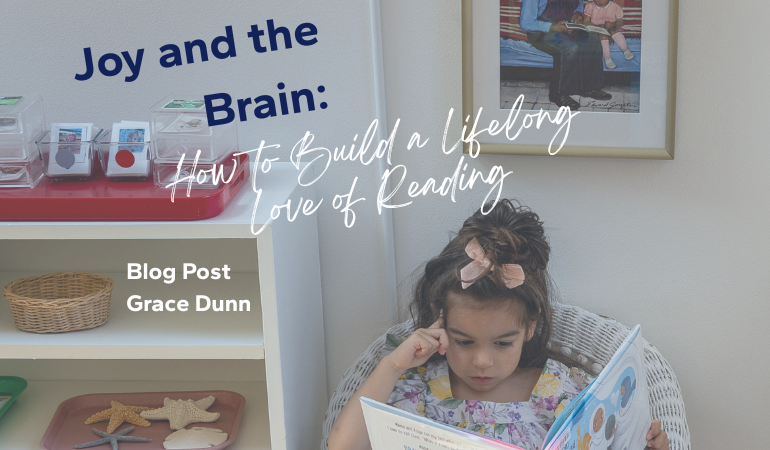
When I opened my daughter’s bedroom door, I found her curled up under a blanket with a book she had discovered “all by herself.” Her cat Luna seemed to be enjoying this experience too. I smiled and simply collected the moment. I watched her eyebrows as they lifted at a surprising plot twist.
Then, without looking up, she let out a joyful gasp and whispered, “Mom, listen to this part.”
There were no assignments, no incentives, no one telling her she had to read. She was simply captivated. And in that moment, I was reminded: learning thrives when there is joy.
The Science of Joy
It was a small but consequential moment of joy, and it reminded me of a profound truth: joy is never a frivolous extra because it is the very evidence of inner growth.
The great educator, Dr. Maria Montessori, wrote that “one test of the correctness of educational procedure is the happiness of the child.” She saw joy as a sign that the spirit was engaged, the mind alive, and the heart connected.
She understood that education was not meant to feel heavy or forced, but to awaken an intrinsic love of discovery. When children work with freedom, choice, and meaningful tasks, joy naturally arises. As a result, calmness, discipline, and purpose emerge.
I think about this often, especially as a mother. I remind my daughters: do the things that bring you joy. I course-correct them, and myself, when life drifts too far into the mechanical: full days at work, after-school activities, and errands that stretch late into the evening.
Contemporary neuroscience is now able to precisely map what this philosophy intuited a century ago. Research shows that joy is not only a feeling but also a physiological state that nourishes the brain and body.
When we experience joy, our brains release dopamine, serotonin, oxytocin, and endorphins. These chemicals of well-being strengthen resilience, deepen connection, and improve our long-term health.
The power of intentional choice in our lives is undeniable. Research from the 85-year-long Harvard Study of Adult Development reminds us that about 40 percent of our happiness is within our control—created by the choices we make to prioritize meaningful moments, relationships, and joy.
This consistent, deep emphasis on a child’s inner drive is why, for instance, longitudinal research demonstrates that following this foundational educational approach leads to greater well-being in adulthood.
Where Joy Resides
Joy is not just something children need; it is something that everyone needs. It is an essential foundation for humanity at every age. Sometimes joy bursts forth in epic, unforgettable moments, such as an awe-inspiring vacation or a dream realized.
More often, though, joy is found in the micro-moments: a laugh shared over dinner, a little hand squeezing yours, or the quiet ritual of reading a book with your child before bed. These “small” joys, when noticed and savored, become the threads that weave deep meaning into the fabric of our lives.
This is why joy matters so much in literacy. When a child discovers a book that makes them giggle or grips them so tightly they don’t want to put it down, they aren’t just learning to read; they are falling in love with learning itself. Joy is part of what makes literacy stick.
A child who reads with delight will return to books again and again, deepening fluency, comprehension, and curiosity. And when we read with our children snuggled on the sofa, passing the pages back and forth, listening to the same beloved story for the tenth time, we aren’t just building vocabulary, we’re building a relationship with literature.
Children watch us closely. When they see us absorbed in a story, when they notice the smile that spreads across our face at a beautiful sentence, or when they hear us laugh out loud at a funny passage, they learn that reading is not an obligation but a source of delight. A home filled with books and the sound of shared reading becomes a place where joy in learning is alive.
Joy is both the means and the measure of education. It is what makes reading more than a skill. It becomes a lifelong refuge. It is what keeps us human amid the busy routines and responsibilities that threaten to consume us. And it is what this philosophy always pointed toward: the understanding that when joy is present, growth is happening.
Practical Advice: Cultivating Joyful Literacy
Regardless of where your child is on the literacy spectrum, now is a perfect time to become more intentional about reading at home.
Consider these three simple ways to build joyful literacy:
- Model Reading: Let your children see you absorbed in a book. When they notice the smile that spreads across your face at a beautiful sentence or hear you laugh aloud at a funny passage, they learn that reading is a source of delight, not a chore.
- Read Aloud and Discuss: Reading aloud is incredibly powerful. You teach them what reading sounds like (fluency), and you build comprehension by stopping to talk about the characters and themes. Asking your child to think about the author’s message will help them become critical thinkers.
- Wander and Discover: As the weather changes and the daylight grows shorter, we naturally find ourselves drawn indoors. This is a wonderful reason to wander into your local library or bookstore and discover something new. When we wander aisles with our children, pulling books from shelves, flipping through pages, and delighting in unexpected discoveries, we connect with curiosity and spark rich discussions.
If finding the right books feels daunting, I encourage you to explore this amazing resource. Gifting your child a library card or visiting a favorite bookstore corner can become a reminder that books are treasures to be explored.
These shared experiences cultivate connection while planting the seeds of joy in reading.
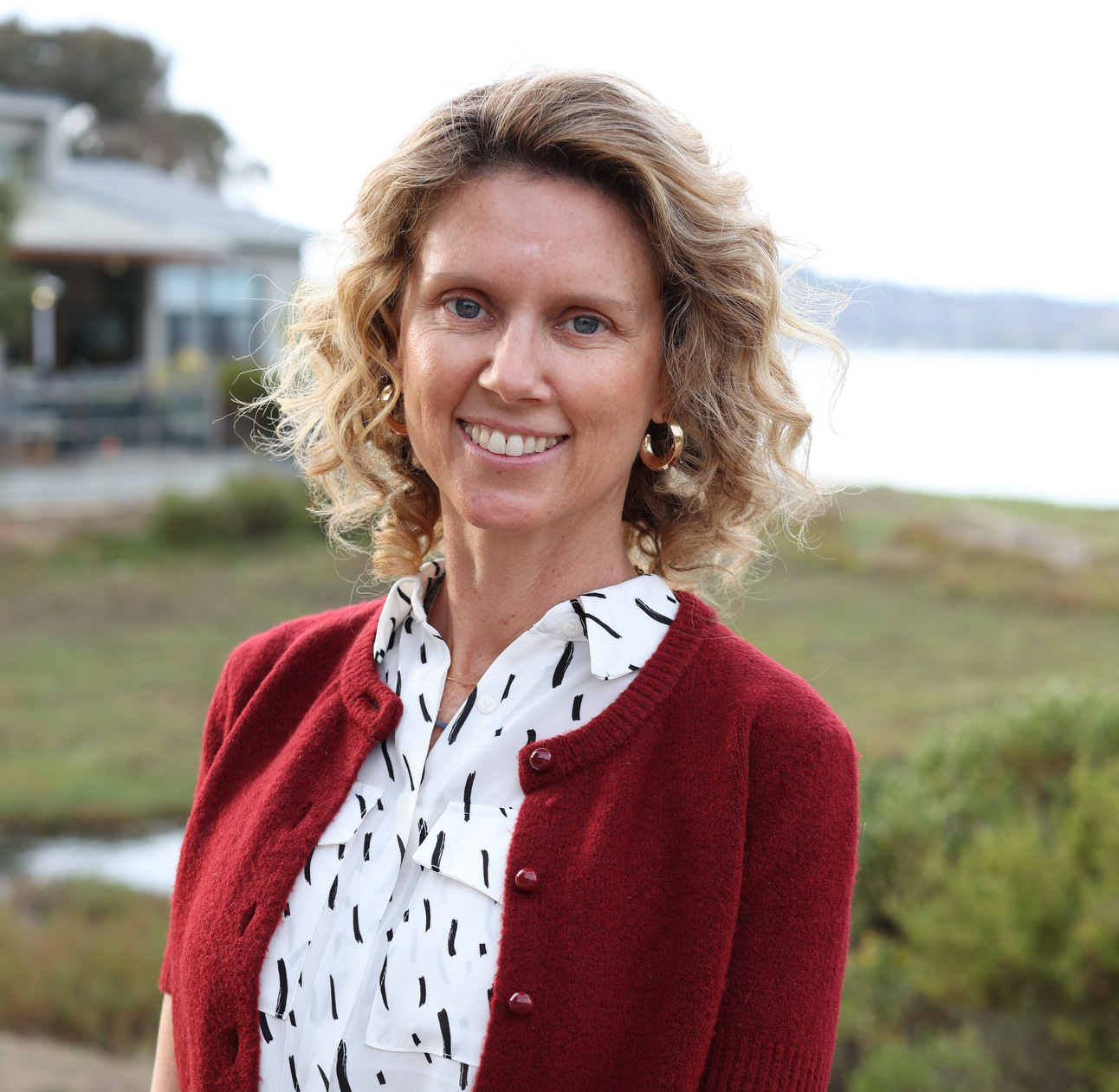
Grace has worked in education for more than 25 years, teaching at every level from preschool to the university level. Most recently, she taught literacy instruction in the education department at the University of North Carolina, Asheville, where she also led courses on mindfulness. Grace holds a bachelor’s degree in elementary education from Western Carolina University and a master’s degree in education, with a concentration in language and literacy, from San Francisco State University. Her professional development has focused on the science of reading, curriculum design, brain development, and supporting neurodivergent learners, and she is trained in the Orton-Gillingham and Wilson Reading System methods as well as Lucy Calkins’ Units of Study. Believing a love of learning is the foundation of a joyful education, she has long admired the Montessori philosophy for its ability to nurture curiosity and independence. A lifelong learner, Grace is also trained in mindfulness, yoga, and integrative healing practices. She enjoys staying active, exploring nature, traveling, writing, slow mornings, and meaningful connections.